
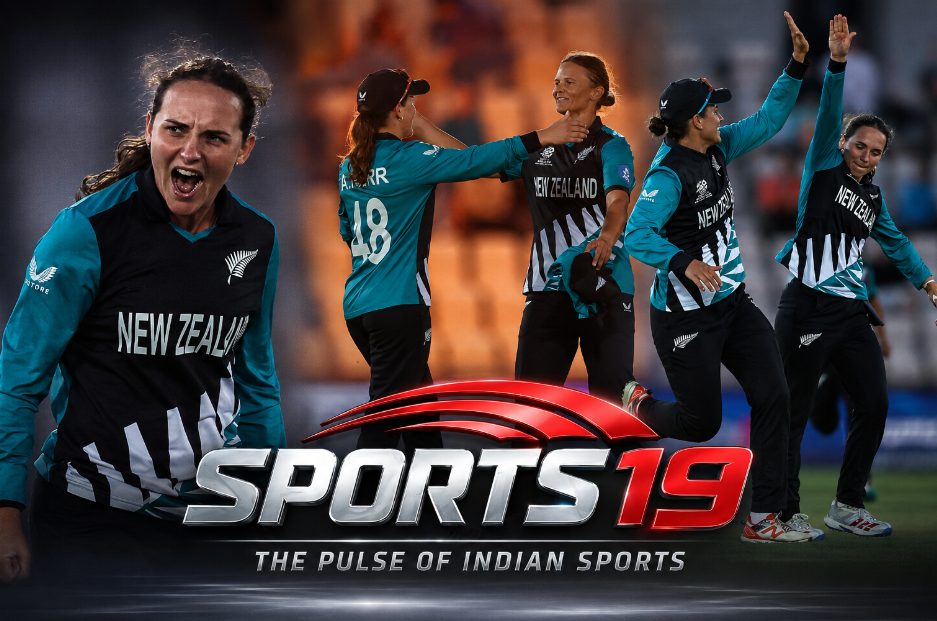
New Zealand Women escaped with a precious four-run victory over Ireland Women in a tense ICC Women’s T20 World Cup 2026 Group B contest, but the final margin barely reflected the drama that unfolded under the lights. For much of the evening, Ireland looked capable of pulling off one of the tournament’s biggest upsets. Instead, New Zealand found a way to cling on when the pressure was at its highest, with captain Amelia Kerr leading from the front in a performance that blended skill, composure and leadership. New Zealand Women
The celebrations at the final whistle carried as much relief as joy. New Zealand knew they had been pushed to the edge.
After being asked to bat, the White Ferns never fully settled. Early wickets prevented them from building the kind of platform they would have wanted, and Ireland’s bowlers maintained disciplined lines that denied easy scoring opportunities. Every time New Zealand threatened to accelerate, another breakthrough arrived.
Georgia Plimmer fell inside the opening over, and when Maddy Green followed cheaply, Ireland sensed an opportunity. The atmosphere in the stands shifted noticeably. Irish supporters found their voice, believing their side could squeeze one of the tournament heavyweights.
Amelia Kerr responded in the manner expected of a captain. Rather than forcing the pace, she absorbed pressure and steadied the innings. Brooke Halliday joined her in rebuilding the innings, rotating strike and waiting for loose deliveries. Neither batter dominated, but together they dragged New Zealand back into the contest.
The innings gained real momentum through Izzy Sharp. Her brisk contribution injected life into a total that had been threatening to stall. Sharp played with freedom, finding boundaries at crucial moments and ensuring Ireland could not completely dictate proceedings.
Late cameos from Suzie Bates and Jess Kerr provided the finishing touch. Their aggressive intent during the closing overs pushed New Zealand to 140, a score that looked competitive but far from imposing on a surface that rewarded disciplined strokeplay.
Ireland walked out for the chase carrying genuine belief.
That confidence took an early hit when Amy Hunter departed cheaply, but captain Gaby Lewis immediately settled nerves. Calm and assured, she guided the innings through the early overs while Ireland assessed the target. New Zealand Women
What followed was one of the most impressive partnerships of the tournament so far.
Lewis and Orla Prendergast gradually shifted pressure back onto New Zealand. There were no reckless shots or desperate swings. Instead, they accumulated intelligently, picked gaps and forced New Zealand’s bowlers to constantly rethink their plans.
As the partnership grew, so did the noise inside the stadium.
Every boundary from Lewis was greeted with roars from Irish fans. Prendergast matched her captain almost stroke for stroke, displaying remarkable composure against an experienced New Zealand attack. With wickets in hand and the asking rate under control, Ireland suddenly looked favourites.
The turning point arrived deep into the chase.
Ireland had reached a commanding position with Lewis and Prendergast appearing set to guide their side home. New Zealand desperately needed something special. Amelia Kerr delivered it.
Prendergast’s dismissal broke the partnership and shifted the emotional balance of the contest. Moments later, Rebecca Stokell followed without scoring. In the space of two deliveries, Ireland’s chase lost its rhythm.
What had looked like a comfortable finish became a nerve-racking sprint.
The required rate climbed. New Zealand’s fielders tightened their ring around the batters. Every dot ball felt enormous. Every single was cheered as though it were a wicket.
Amelia Kerr’s fingerprints were all over that decisive phase. Her figures alone do not fully explain her influence. She sensed the moment, altered the tempo of the match and dragged momentum back towards New Zealand when it appeared to be slipping away. New Zealand Women
Earlier, she had top-scored with the bat. Later, she removed two crucial wickets. Throughout the evening she looked like the player most comfortable with the pressure. That combination made her the obvious Player of the Match and the central figure in New Zealand’s escape act.
From a tactical perspective, New Zealand’s experience proved decisive.
Ireland’s top order played exceptionally well, but the White Ferns continued attacking with their fields rather than retreating into defensive cricket. They trusted their senior bowlers to create opportunities and refused to allow Ireland easy boundary options during the final overs.
The introduction of Kerr at key moments and the disciplined spells from Bree Illing and Rosemary Mair ensured Ireland never completely broke free despite the strong partnership.
For Ireland, the defeat will hurt.
They controlled large portions of the game and came within touching distance of a famous victory. Lewis and Prendergast showed that Ireland possess the quality to challenge established cricketing nations, and their performance will give confidence heading into the remainder of the tournament.
The crowd recognised that effort. Even after the final ball, Irish supporters remained standing, applauding a side that had pushed one of the competition’s strongest teams to the brink.
For New Zealand, the result could prove invaluable. Tournament campaigns are often defined not by dominant victories but by nights when teams survive despite not playing their best cricket. This felt like one of those evenings. New Zealand Women
As the players left the field, the scoreboard still showed just four runs separating the teams. Yet the story behind those four runs was far richer—a contest of nerve, leadership and belief, decided only when New Zealand found the courage to seize the moments that mattered most.
Also Read: Stafanie Taylor’s Late Charge Carries West Indies Past Scotland in World Cup Nail-Bite