

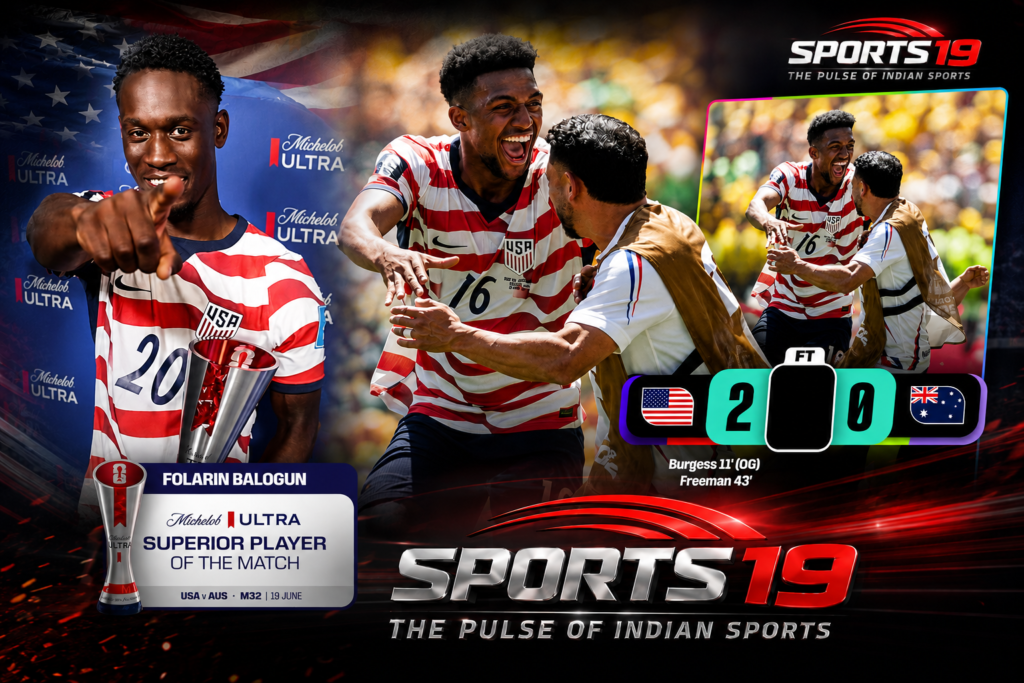
USA vs Australia: The scoreboard showed a comfortable 2-0 victory, but the story inside Seattle Stadium felt far more commanding than the final margin suggested. The United States seized control of Group D at the FIFA World Cup 2026 with a performance built on patience, territorial dominance, and relentless pressure, leaving Australia chasing shadows for long stretches of the night.
By the final whistle, American supporters were already singing about knockout football. Australia, meanwhile, walked off knowing the result could have been much heavier had they not spent much of the evening throwing bodies in front of shots and clearing danger from their own penalty area.
The breakthrough arrived early, and it came from the kind of moment that can completely alter a World Cup match. In the 11th minute, pressure from the United States forced confusion inside the Australian defense. A dangerous ball into the box created panic, and defender C. Burgess inadvertently turned it into his own net. The reaction from the Australian players said everything. Hands went to heads, shoulders slumped, and suddenly the game plan they had carefully prepared was already under strain.
Rather than retreat after taking the lead, the Americans sensed vulnerability. They pushed their defensive line higher, circulated possession confidently, and forced Australia deeper and deeper toward their own goal. Every time Australia attempted to build from the back, they found blue shirts closing passing lanes and winning second balls.
The match developed into a battle over territory rather than chances. Australia managed only brief spells of possession and rarely looked capable of sustaining attacks. Their forwards often found themselves isolated, waiting for support that never arrived. When opportunities did emerge, the American defense quickly shut them down before they could become genuine threats.
The decisive moment arrived shortly before halftime.
After spending much of the opening period dictating the rhythm, the United States finally found the second goal their performance deserved. A. Freeman struck in the 43rd minute, rewarding a period of sustained pressure that had stretched Australia’s defensive structure to its limits. As the ball hit the net, the stadium erupted. Players sprinted toward the corner flag, while Australian heads dropped once again. Going into halftime two goals behind felt like a mountain against a side that had controlled nearly every aspect of the contest. USA vs Australia
That goal changed the complexion of the evening.
Australia emerged after the break with greater urgency and determination. They pressed higher, competed more aggressively in midfield, and attempted to force mistakes. Yet every promising movement seemed to run into an American wall. The United States remained composed, refusing to panic or abandon its structure.
While Australia managed to register a handful of efforts, they struggled to test the American goalkeeper consistently. The U.S. back line anticipated danger well, stepping into passing lanes and breaking up attacks before they gathered momentum. Australia defended bravely throughout, recording numerous clearances and blocks, but constantly absorbing pressure eventually drained both energy and belief.
If one player embodied the American performance, it was A. Freeman.
His goal was crucial, but his influence stretched beyond the scoresheet. Freeman repeatedly found pockets of space, linked midfield with attack, and provided the kind of movement that unsettles defensive lines. Every time the United States advanced, he seemed involved in some capacity. His calm finish before halftime transformed a narrow advantage into complete control and allowed the Americans to manage the second half on their own terms.
Tactically, the contest highlighted the growing maturity of the United States. They dominated possession, completed passes with confidence, and rarely allowed Australia opportunities to play in transition. The Americans finished with a significant edge in ball control and passing accuracy, reflecting how effectively they dictated tempo from start to finish. USA vs Australia
Australia’s defensive effort deserves recognition. Their players threw themselves into challenges, won tackles, and produced several important clearances that prevented the scoreline from becoming uncomfortable. Yet defending for long stretches inevitably carries a price. Without sustained possession, Australia struggled to relieve pressure or create the attacking rhythm needed to mount a comeback.
The atmosphere inside Seattle Stadium evolved with every passing minute. The early goal ignited the American supporters, who quickly sensed their team was in control. Chants rolled around the venue whenever the United States pieced together long passing sequences, and each interception or defensive recovery drew loud approval from the crowd.
By contrast, Australian fans attempted to lift their side whenever attacks developed, but those moments were increasingly rare. As the match entered its final stages, the confidence among American supporters was unmistakable. They were not merely celebrating a win; they were celebrating a performance that suggested bigger ambitions. USA vs Australia
This result places the United States in a powerful position within Group D. Beyond the three points, the manner of victory sends a message to the rest of the field. The Americans looked organized, disciplined, and capable of controlling matches against quality opposition.
For Australia, the challenge now becomes psychological as much as tactical. There were moments of resilience and commitment, but they will need greater attacking courage and longer periods of possession if they hope to revive their campaign.
Long after the final whistle, American players remained on the pitch applauding supporters who had turned Seattle into a sea of red, white, and blue. The fans responded with roars of approval. On a night when pressure, patience, and precision combined perfectly, the United States did more than win a football match—they announced themselves as serious contenders with a performance that carried the confidence of a team believing its World Cup journey may only be beginning. USA vs Australia
Also Read: Romo the Hero as Mexico Seal Knockout Spot with Hard-Fought Victory Over South Korea