

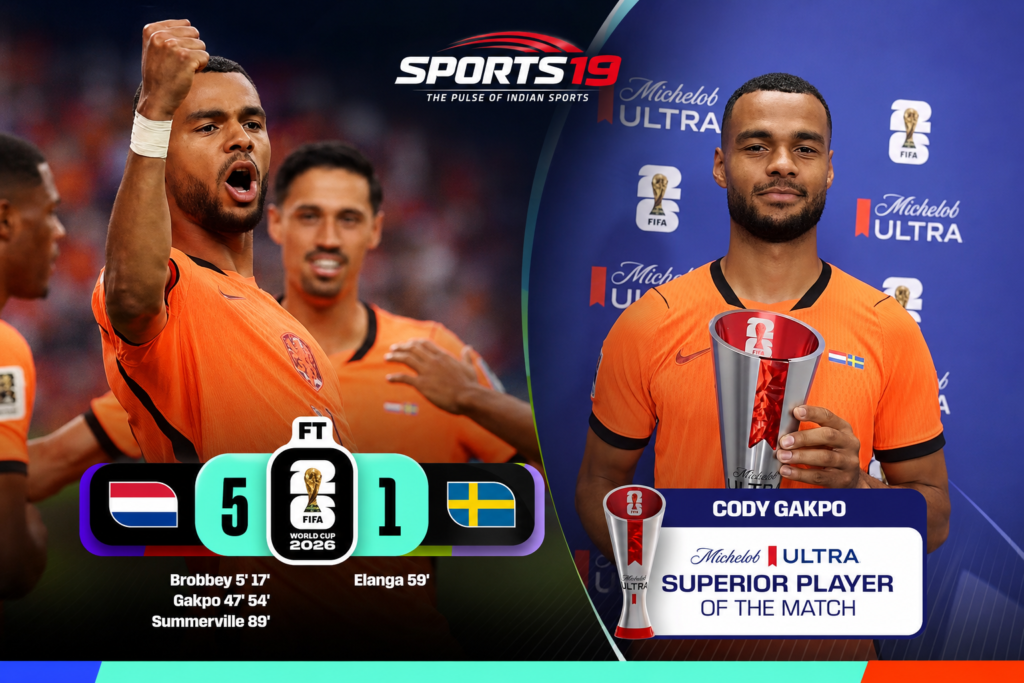
Netherlands vs Sweden: The orange wave rolled through Houston on Friday night, and Sweden simply could not hold it back.
In a result that sent a message to the rest of the FIFA World Cup 2026 field, the Netherlands dismantled Sweden 5-1 at Houston Stadium, turning a meeting between two European heavyweights into a one-sided exhibition of ruthless finishing and relentless pressure. By the final whistle, Dutch supporters were singing long before the players reached them, while Sweden’s players stood scattered across the pitch, staring at a scoreboard few inside the stadium could quite believe.
This was supposed to be a battle for supremacy in Group F. Instead, it became a showcase of Dutch power. The tone was set almost immediately. Only five minutes had elapsed when Brian Brobbey pounced to put the Netherlands ahead. The roar from the sea of orange inside the stadium was deafening, and Sweden suddenly looked rattled. Before they could regain their footing, Brobbey struck again in the 17th minute, finishing another incisive Dutch move that exposed gaps in Sweden’s defensive shape. Netherlands vs Sweden
At 2-0, the Dutch sensed vulnerability. Sweden attempted to settle the game through possession and movement, even creating opportunities of their own, but every attack seemed to run into a wall. The Netherlands defended aggressively, recovered the ball quickly, and attacked with purpose whenever space appeared. Netherlands vs Sweden
The opening stages of the second half delivered the moment that effectively ended the contest. Just two minutes after the restart, Cody Gakpo arrived with a clinical finish that pushed the score to 3-0. Sweden had barely absorbed that blow when Gakpo struck again seven minutes later. Suddenly, what had begun as a competitive contest had become a demolition. Ntherlands vs Sweden
The Swedish supporters behind one goal tried to rally their team, waving flags and urging a response. For a brief spell, Anthony Elanga gave them something to cheer. His goal just before the hour mark injected life into the contest and sparked hope that Sweden might somehow manufacture a remarkable comeback.
For a few minutes, the atmosphere changed. The Dutch crowd grew quieter. Sweden pushed forward. The game opened up. But the revival never truly arrived.
Instead, the Netherlands calmly regained control, slowing Sweden’s momentum and forcing them into increasingly desperate attacks. Sweden actually produced more shots than their opponents and tested the Dutch goalkeeper repeatedly, but the efficiency between the two sides proved stark. While Sweden wasted opportunities, the Netherlands punished mistakes with devastating precision.
The decisive turning point came not with a goal, but with the Dutch reaction after conceding. Many teams become nervous when a comfortable lead is reduced. The Netherlands did the opposite. Rather than retreating deeper, they continued pressing and moving the ball confidently through midfield. Sweden’s brief surge was extinguished almost as quickly as it had appeared.
When Crysencio Summerville added a fifth goal in the 89th minute, it felt symbolic. The Dutch were not merely winning anymore; they were celebrating dominance.
Brobbey and Gakpo will naturally claim the headlines after scoring braces, but Gakpo’s influence stretched beyond his goals. Every time he received possession between Sweden’s defensive lines, panic followed. His movement dragged defenders out of position, opened channels for teammates, and accelerated attacks at precisely the right moments.
Brobbey, meanwhile, provided the perfect focal point. His early strikes altered the psychology of the match. Sweden spent the remainder of the evening chasing the game, and that pursuit left them increasingly exposed. Netherlands vs Sweden
Tactically, the Netherlands won the battle through discipline and efficiency. The possession split remained relatively even, and Sweden actually completed more passes and generated more attempts on goal. Yet football matches are rarely decided by volume alone. The Dutch structure without the ball proved superior. They forced Sweden into difficult shooting positions, protected dangerous central areas, and relied on excellent goalkeeping whenever called upon.
The Dutch defensive unit deserves enormous credit. While attackers grabbed the spotlight, their organization prevented Sweden from converting pressure into genuine momentum. Seven goalkeeper saves underlined just how resilient they were when tested.
Around the stadium, the atmosphere reflected the growing belief surrounding this Dutch side. Every Dutch goal unleashed another explosion of noise from supporters dressed in orange. Chants echoed across the stands throughout the second half, growing louder with every passing minute. By contrast, Swedish fans spent much of the evening urging their players forward despite the widening deficit, refusing to abandon hope until the closing stages.
The final whistle produced scenes of celebration rather than relief. The Netherlands now sit atop Group F and, perhaps more importantly, have announced themselves as genuine contenders. Winning is one thing. Dismantling a respected European opponent on the World Cup stage is something else entirely.
For Sweden, the defeat serves as a painful reminder that impressive attacking numbers mean little without defensive solidity and composure in key moments. There is enough quality in the squad to recover, but the margin for error has suddenly disappeared. Netherlands vs Sweden
As the Houston lights illuminated the orange-clad sections long after the match ended, Dutch players applauded supporters who had witnessed something special. World Cups are remembered for nights when contenders reveal themselves.
This felt like one of those nights. The Netherlands did not just beat Sweden. They announced their arrival.
Also Read: Paraguay Stun Türkiye as Galarza Strikes Early