

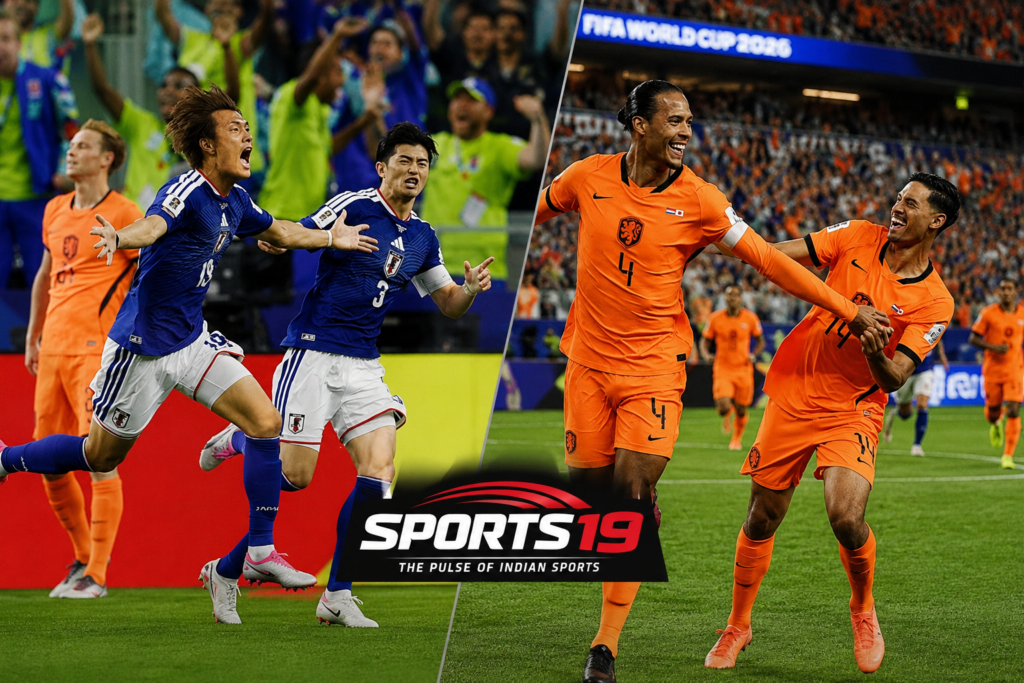
Netherlands vs Japan: The scoreboard read 2-2, but the story inside Arlington’s Dallas Stadium was far richer than a simple draw. For long stretches, the Netherlands looked destined to secure a crucial FIFA World Cup Group F victory. Instead, Japan once again showcased the resilience that has become a trademark of their international football identity, striking late to rescue a valuable point in dramatic fashion.
In a match that balanced Dutch control against Japanese efficiency, both sides walked away with mixed emotions. The Netherlands dominated possession, dictated the tempo, and created the greater volume of chances. Japan, however, proved that football’s most dangerous weapon is often belief.
The Dutch entered the contest knowing that a victory would strengthen their position in the group standings. From the opening whistle, they imposed themselves on proceedings, controlling 60 percent possession and completing an impressive 516 passes at an 89 percent accuracy rate. Their midfield circulated the ball with confidence, forcing Japan to spend significant periods without possession. Yet despite their territorial advantage, the breakthrough did not arrive until the second half. Netherlands vs Japan.
The deadlock was finally broken in the 51st minute when captain Virgil van Dijk stepped forward and delivered a goal worthy of the occasion. The towering defender’s finish sparked celebrations among the Dutch supporters and appeared to validate their dominance. Japan’s response, however, was immediate and emphatic.
Just six minutes later, Keito Nakamura silenced the orange-clad sections of the stadium by leveling the score in the 57th minute. The goal shifted the momentum and reminded everyone why Japan has earned a reputation as one of international football’s most disciplined and dangerous tournament teams. Netherlands vs Japan.
The Netherlands refused to let the setback derail their ambitions. Their pressure continued to mount, and the reward arrived in the 64th minute when Crysencio Summerville restored the Dutch advantage. With seven shots on target from 11 total attempts, the Netherlands consistently tested Japan’s defensive structure and looked capable of extending their lead further. Instead, Japan’s defensive resilience kept the contest alive.
Goalkeeper heroics played a significant role in ensuring the Asian side remained within touching distance. Japan’s shot-stopper produced five crucial saves, repeatedly denying Dutch attackers and preventing the match from slipping away. Those interventions ultimately proved decisive.
As the clock ticked toward full time, the Netherlands appeared on course for three valuable points. Japan, though, had one final twist to deliver. In the 89th minute, Daichi Kamada produced the moment that changed the narrative of the evening. His late equalizer completed Japan’s comeback and stunned a Dutch side that had controlled many of the game’s statistical categories. Netherlands vs Japan.
The final whistle brought contrasting reactions. Dutch players were left reflecting on missed opportunities after registering more possession, more passes, and more shots on target. Japan, meanwhile, celebrated a point earned through persistence, organization, and clinical finishing when it mattered most.
Statistically, the Netherlands enjoyed the stronger evening. They outshot Japan 11-8, recorded seven shots on target compared to Japan’s three, completed 174 more passes, and held a significant possession advantage. Yet football rarely rewards statistics alone. Japan demonstrated that efficiency can be just as valuable as control.
The result leaves Group F finely balanced and ensures that both nations remain firmly in the race for qualification. If this encounter proved anything, it is that neither side will be easy to overcome as the tournament progresses.
For the Netherlands, the challenge will be converting dominance into victories. For Japan, the takeaway is equally clear: they possess the character and quality to compete with anyone on football’s biggest stage. And in a World Cup where margins are often razor-thin, that belief may prove priceless.
Also Read: Germany Send World Cup Warning With Ruthless 7-1 Win Against Curaçao