
There are many ways to tell the story of India. Through its freedom struggle. Through its Constitution. Through the voices of generations that fought for a country they believed could one day stand tall on its own.
But there is another story that plays out every day — on cricket grounds, athletics tracks, wrestling mats, boxing rings, badminton courts, hockey fields and stadiums across the country.
It is the story of an India that refuses to stay down.
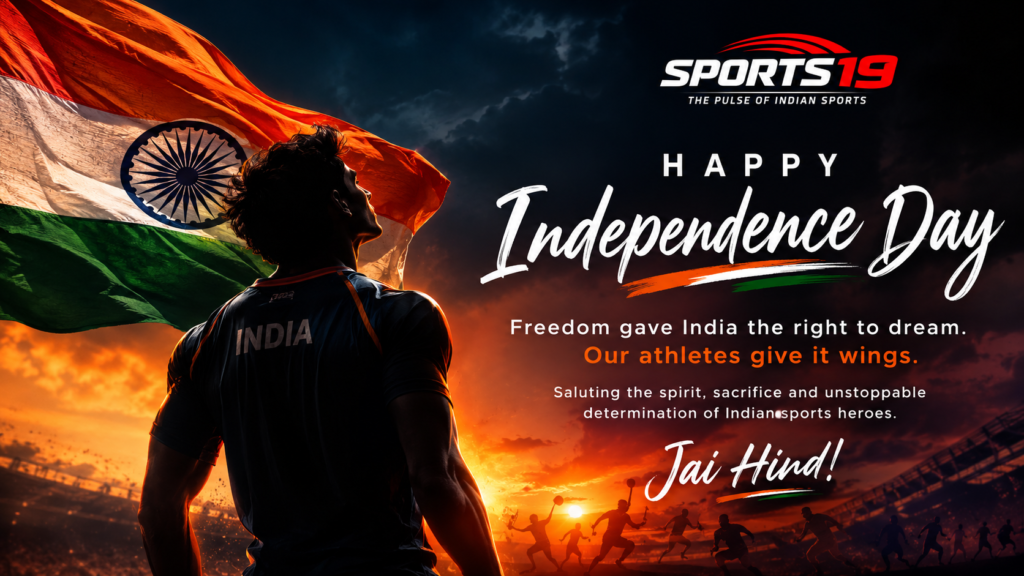
On Independence Day, Sports19 celebrates not just the nation’s freedom, but the sporting spirit that has carried the Indian tricolour to some of the biggest stages in world sport.
For millions of Indians, sport is far more than a result on a scoreboard. It is emotion. It is identity. It is the moment an entire neighbourhood falls silent before a decisive delivery, the roar that follows a last-minute goal, the tears after a medal and the quiet determination of an athlete who knows that nobody will remember the excuses — only the performance.
India’s sporting journey has not always been easy.
For decades, athletes had to fight for recognition, facilities and opportunities. Many trained without the luxuries available to competitors from sporting powerhouses. Some came from small towns and villages where becoming a professional athlete looked more like a dream than a realistic career.
Yet they kept going. That resilience has become one of the defining characteristics of Indian sport.
From hockey’s golden generations to the rise of Indian cricket, from Olympic medalists to world champions, India’s athletes have repeatedly shown that sporting success is rarely built overnight. Behind every medal sits a long road of early mornings, injuries, defeats, financial struggles, family sacrifices and countless hours when nobody was watching.
The tricolour, however, changes everything.
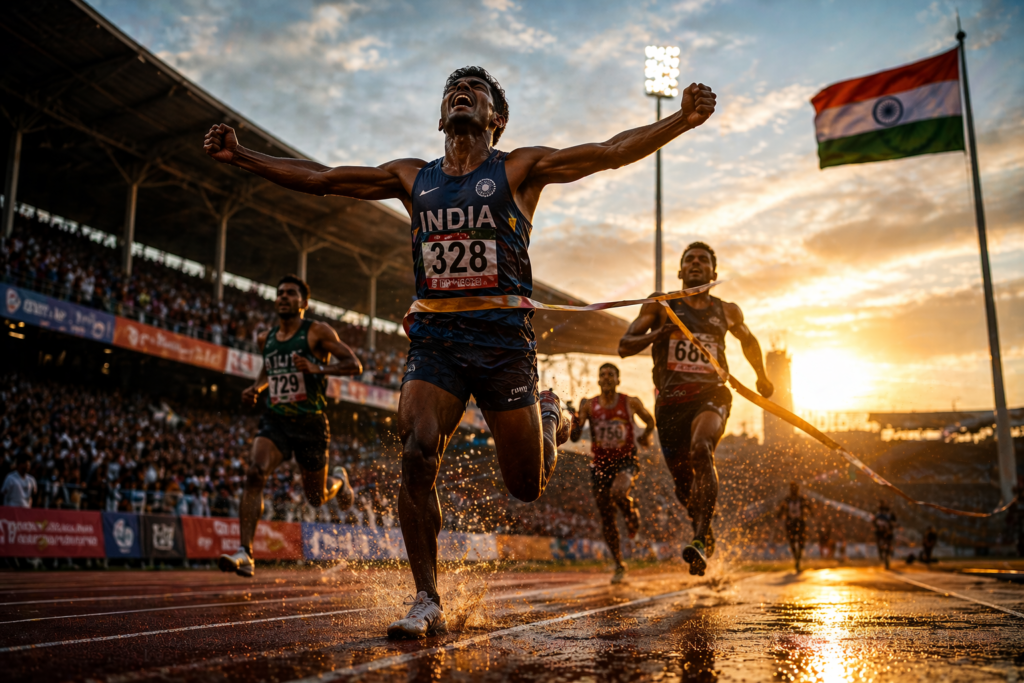
When an Indian athlete walks onto an international field, the individual suddenly carries something much larger than a personal ambition. A victory becomes a shared celebration. A medal ceremony becomes a moment when millions stop whatever they are doing to watch the Indian flag rise.
That emotional connection is perhaps sport’s greatest power.
Cricket has undoubtedly played a huge role in shaping modern Indian sporting culture. Generations have grown up around iconic victories, unforgettable innings and nights when an entire nation seemed to breathe together.
But India’s sporting story is much bigger than cricket.
Neeraj Chopra’s golden throw transformed the way an entire generation looked at athletics. Indian badminton has produced champions capable of standing toe-to-toe with the world’s best. Wrestlers, boxers, shooters, weightlifters, table-tennis players, archers and para-athletes have repeatedly pushed Indian sport into territories once considered unreachable.
The rise of women in Indian sport deserves its own chapter.
Athletes such as Mary Kom, P.V. Sindhu, Saina Nehwal, Mirabai Chanu and countless others have helped break an old assumption that sporting ambition belongs primarily to men. Their success has inspired young girls in places far away from India’s major sporting centres to believe that they too can dream bigger.
And perhaps that is where the true meaning of India’s sporting progress lies.
Not simply in medals.
Not simply in trophies.
But in the child watching from the stands who decides that one day she wants to compete. In the boy practising late in a dusty ground because he believes he can make it. In parents who choose to support a sporting dream. In coaches who continue working despite limited resources.
Every generation of athletes leaves something behind for the next one.
India is now producing a sporting culture that is deeper, wider and more ambitious than ever before. Professional leagues have created new opportunities. Grassroots programmes are bringing young talent into organised sport. Technology and sports science are changing preparation. Indian athletes are travelling abroad, competing regularly against the world’s best and demanding to be taken seriously.
There will still be defeats. There will still be disappointing campaigns, missed medals and painful exits. But that is sport. The greatness lies not in winning every time, but in having the courage to return after losing. That is why Independence Day feels particularly meaningful through the eyes of sport.
Freedom gave India the right to dream. Sport has given many Indians a stage on which to prove those dreams are possible.
Today, as the tricolour flies across the country, Sports19 remembers every athlete who has stood beneath it — the champions whose names became history and the lesser-known competitors whose sacrifices never received headlines.
Because the story of Indian sport was never written by medals alone. It was written by perseverance. By courage. By ordinary people doing extraordinary things.
And somewhere across India today, another young athlete is probably picking up a bat, tying a pair of boots, stepping onto a track or entering a training hall.
Perhaps nobody knows their name yet. Perhaps they have no idea how far their journey can take them. But that is how sporting history begins.
One dream. One athlete. One tricolour. And a nation watching with hope.
Happy Independence Day, India. 🇮🇳
Sports19 — The Pulse of Indian Sports.