

Argentina vs Austria: World Champions Lean on Their Captain Once Again in Dallas. For 90 minutes, Austria frustrated, resisted and believed. Then Lionel Messi reminded everyone why football still bends to his will.
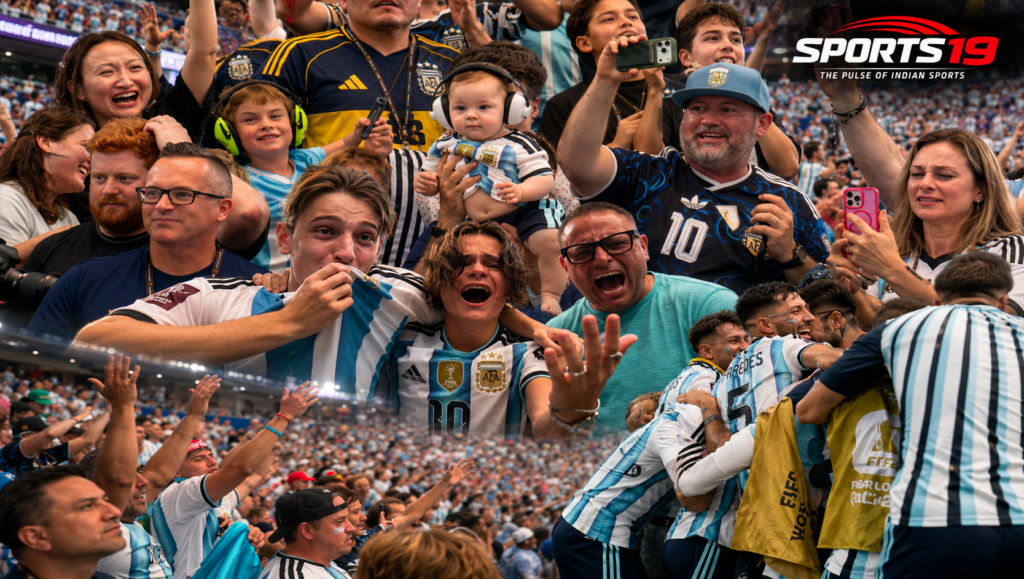
Inside a packed Dallas Stadium, where Argentina shirts outnumbered red-and-white Austrian colors by a considerable margin, the world champions opened their FIFA World Cup 2026 campaign with a 2-0 victory that felt far more complicated than the final score suggested. Messi struck once before halftime and again deep into stoppage time, turning a tense evening into a celebration and sending Argentina to the top of Group J.
The final whistle unleashed relief as much as joy. Austria had spent long stretches making life uncomfortable for the tournament favorites, but the moment the match required a touch of genius, Argentina’s captain delivered.
Austria Refused to Be Intimidated
The atmosphere before kickoff carried the unmistakable energy that follows Argentina wherever they travel. Chants echoed around the stadium long before the teams emerged, and every touch from Messi drew a roar.
Yet Austria showed no signs of being overwhelmed. Rather than retreating into a defensive shell, they pressed intelligently and closed passing lanes through midfield. Argentina enjoyed more possession, but the early rhythm never felt entirely comfortable. Every forward movement was met by disciplined Austrian resistance.
Messi drifted across the attacking third searching for pockets of space. Julián Álvarez worked tirelessly between defenders. Still, clear openings remained scarce.
Austria’s game plan was obvious: deny Argentina room centrally, force them wide and trust their defensive organization. For much of the first half, it worked. Then came the breakthrough.
Also Read: Built for the Big Moments: Vaibhav Leads India to Tri-Nation Crown
The Moment That Changed Everything
The deadlock finally cracked in the 38th minute. As Austria momentarily lost its shape, Messi found the tiny gap he had been hunting all evening. The move developed quickly, but what stood out was the speed of his decision-making. Before defenders could react, the ball was in the net.
The stadium erupted. Blue-and-white flags spun wildly in the stands. Supporters who had spent nearly forty minutes growing increasingly anxious suddenly found their voice again.
Austria had defended bravely, but one lapse against a player of Messi’s quality was enough. At halftime, Argentina led 1-0, though nobody inside the stadium felt the contest was settled.
Austria Continued to Fight
The second half followed a familiar pattern. Argentina controlled possession and circulated the ball with patience. Austria remained compact and disciplined, waiting for opportunities to counter.
What impressed most about Austria was their refusal to panic after conceding. They continued competing for second balls, challenged aggressively in midfield and forced Argentina to stay alert.
There were moments when Austrian supporters sensed a chance. A dangerous attack here. A promising transition there. But Argentina’s defensive structure never truly cracked.
The South Americans won key tackles, intercepted passes before danger developed and consistently recovered possession. Their control was not flashy, but it was effective. As the clock moved into the final minutes, Austria still trailed by only a goal. That slim margin kept hope alive.
Messi Remains Football’s Ultimate Difference-Maker

If there was any lingering doubt about the outcome, Messi erased it in stoppage time. With Austria pushing higher in search of an equalizer, spaces finally appeared. Argentina exploited them ruthlessly. Messi applied the finishing touch in the fifth minute of added time, sparking scenes that felt almost inevitable.
The celebration carried a different emotion than his first goal. The opener had provided relief. The second delivered certainty. Even after everything he has achieved, the crowd still reacts to Messi with something approaching disbelief.
Every tournament seems to raise the same question: can he still decide matches at the highest level? On this evidence, the answer remains emphatically yes.
Two goals only tell part of the story. Throughout the evening he dictated tempo, drew defenders out of position and constantly forced Austria to alter its defensive shape. When Argentina needed calm, he provided it. When they needed inspiration, he supplied that too.
Also Read: Yamal Leads Spain to 4-0 FIFA World Cup 2026 Victory
Why Argentina Won
The statistics reflected what unfolded on the pitch. Argentina enjoyed greater possession, completed passes with remarkable accuracy and spent more time controlling the game’s rhythm. More importantly, they remained patient.
Austria’s defensive block tempted frustration, but Argentina never abandoned their principles. Rather than forcing low-percentage attacks, they continued moving the ball until openings appeared. Defensively, Argentina were equally impressive.
Austria managed only limited opportunities on target despite working tirelessly to create them. The world champions protected central areas effectively and rarely allowed dangerous second-phase attacks. It was not Argentina at their most spectacular. It was Argentina at their most mature.
Dallas Felt Like Buenos Aires
The crowd provided a fitting backdrop. Every Messi touch generated anticipation. Every Austrian clearance was met with groans from one side of the stadium and cheers from the other. By the closing stages, supporters were standing for nearly every Argentine attack.
When Messi’s second goal arrived, thousands remained in celebration long after the ball hit the net. The noise rolled around the stadium in waves, transforming a group-stage fixture into something that felt far larger. World Cup matches often create memorable moments. This felt like another chapter in an already legendary story.
What Comes Next
Argentina leave Dallas with exactly what they wanted: three points, a clean sheet and early control of Group J. The performance also served as a reminder that tournament football rarely rewards impatience. Not every victory arrives in spectacular fashion. Sometimes the hardest matches are the most valuable.
Austria, meanwhile, depart with encouragement despite defeat. Their organization, discipline and resilience suggest they remain capable of challenging for qualification if they maintain this level. As supporters filtered into the Texas night, one image lingered above everything else.
Lionel Messi standing at the center of the celebration once again. The years continue to pass. The expectations never disappear. And somehow, when Argentina need him most, he still finds the decisive touch.
Also Read: Egypt Storm Back to Beat New Zealand 3-1 in Group G